

Trade Show and Expo AV: What the Floor and the Stage Each Need
A trade show or business expo is two events happening in the same building at the same time, and they want almost nothing in common from an audio-visual point of view.
One is a floor: a hundred exhibitors at tables, all talking at once, all trying to be heard by someone standing three feet away. The other is a stage: a program of speakers, awards or panels that needs a room full of people to hear one person clearly. Planning them as a single AV job is the most common reason an expo sounds worse than it should.
The floor is an acoustics problem, not an equipment problem
Put a hundred conversations into a ballroom and the room does the rest. Every voice raises to clear the one next to it, and within twenty minutes the whole hall is louder than any individual chose to be.
That is why floor audio is mostly about restraint.
Background music, if any, stays genuinely in the background. The temptation is to fill the room. Filling the room means every exhibitor raises their voice over it, which raises the floor again.
Announcements need to cut through rather than shout. A short chime before a page does more than volume. Distributed speakers at lower levels beat a few loud ones, because the people at the far end hear the same thing as the people underneath.
Exhibitors with their own audio need a rule. One booth with a video playing at conversational volume is fine. Six are not, and by the time it is a problem it is difficult to walk back. Most organizers who have run an expo twice write a sound policy into the exhibitor packet the second year.
The stage is a conventional production, on a tight clock
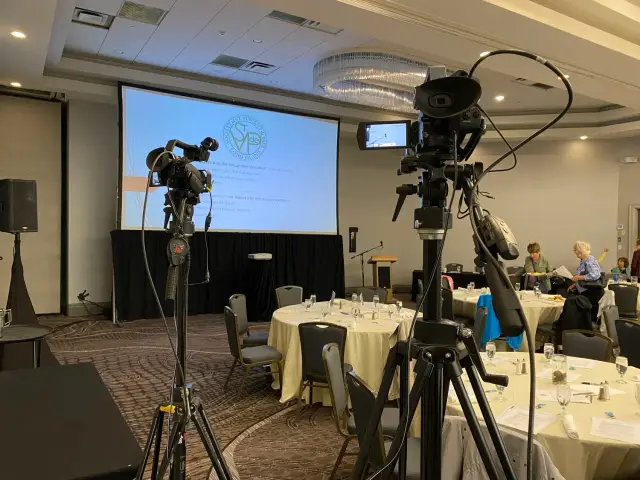
The program side of an expo is a normal general session with one unusual constraint: it has to load in and out around a floor full of people who are already there.
That shapes most of the decisions.
Screens have to work from the back of a busy room
Sightlines at an expo are worse than at a seated event. People are standing, moving, and often behind exhibitor structures. A screen that works for a seated audience of two hundred can be useless to somebody standing behind the third row of tables.
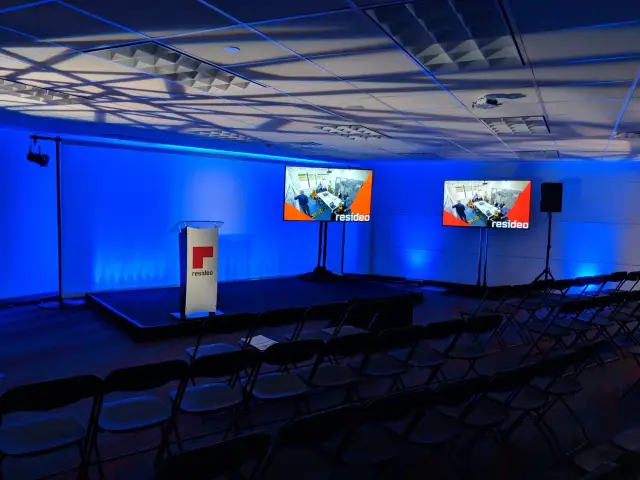
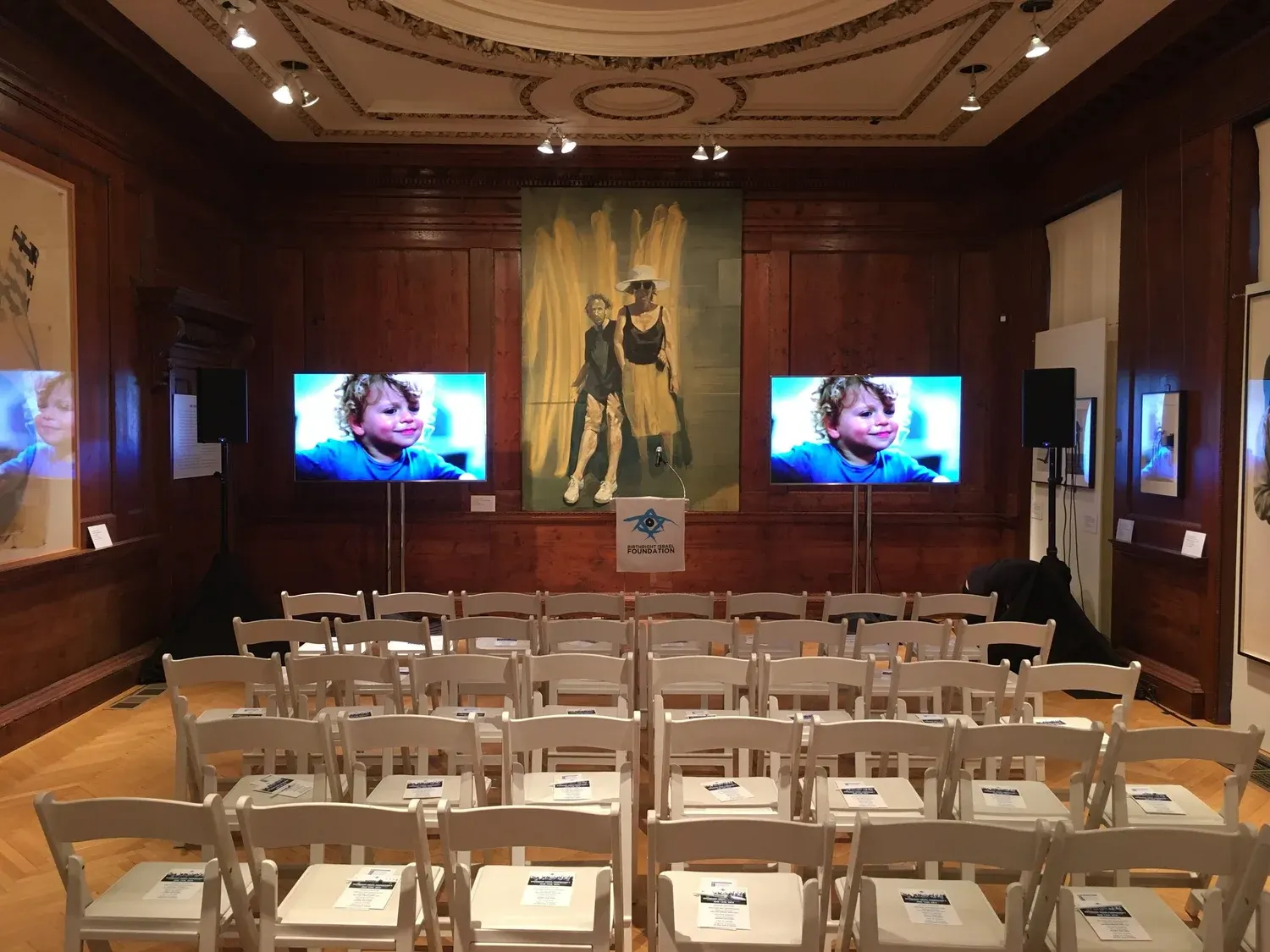
Two screens flanking the stage generally beat one large one in the center, because they give two chances at a clear sightline rather than one. Content should be sized for the person furthest away, which in practice means fewer words and larger ones.
Audio has to cover the stage area without carrying to the floor
This is the genuine technical challenge of an expo, and it is worth raising early. The program needs to be clearly audible in front of the stage and as quiet as possible fifty feet away, where people are still doing business. That is a speaker placement and coverage question, and it is much easier to solve in the room plan than on the day.
Everything hangs on the schedule
An expo stage usually has a handful of short segments with different requirements: a welcome, an anthem, a keynote, an award, a panel. Each one is a different microphone count, a different screen, sometimes a different laptop. There is rarely a rehearsal and never a gap.
The fix is a run of show agreed in advance and a single operator who knows it. Not a bigger system.
What exhibitors actually need to know
If you are taking a table rather than running the event, the useful questions are short.
Is there power at your table, and did you order it? Power is almost always a separate line item and almost always the thing people discover on the morning.
What can you bring, and what has to come from the show? Venues and organizers vary on whether you can bring your own screen, and on what can be attached to walls or hung.
How loud can you be? See above. Ask rather than assume.
Is there internet, and is it the kind you can rely on for a demo? Guest wifi at a full expo is not the same thing as the wifi in an empty ballroom the week before.
The version that works
The expos that sound good and run on time tend to have one thing in common: the floor and the stage were designed together by somebody who had both in mind, early enough that speaker placement, power and the schedule could still move.
That is not a bigger budget. It is a walk of the room with the organizer, the venue and the AV company in it at the same time.
We produce trade shows, business expos and conferences across Long Island and the New York metropolitan area, including the Melville Chamber Business Expo. If you are planning one, start with the room.