
Planning an Awards Show: The AV Decisions That Decide the Night
An awards dinner is one of the few event formats where the audio-visual plan and the run of show are effectively the same document. Everything that makes the evening feel good, or makes it drag, is a timing decision expressed through a screen, a light, and a sound cue.
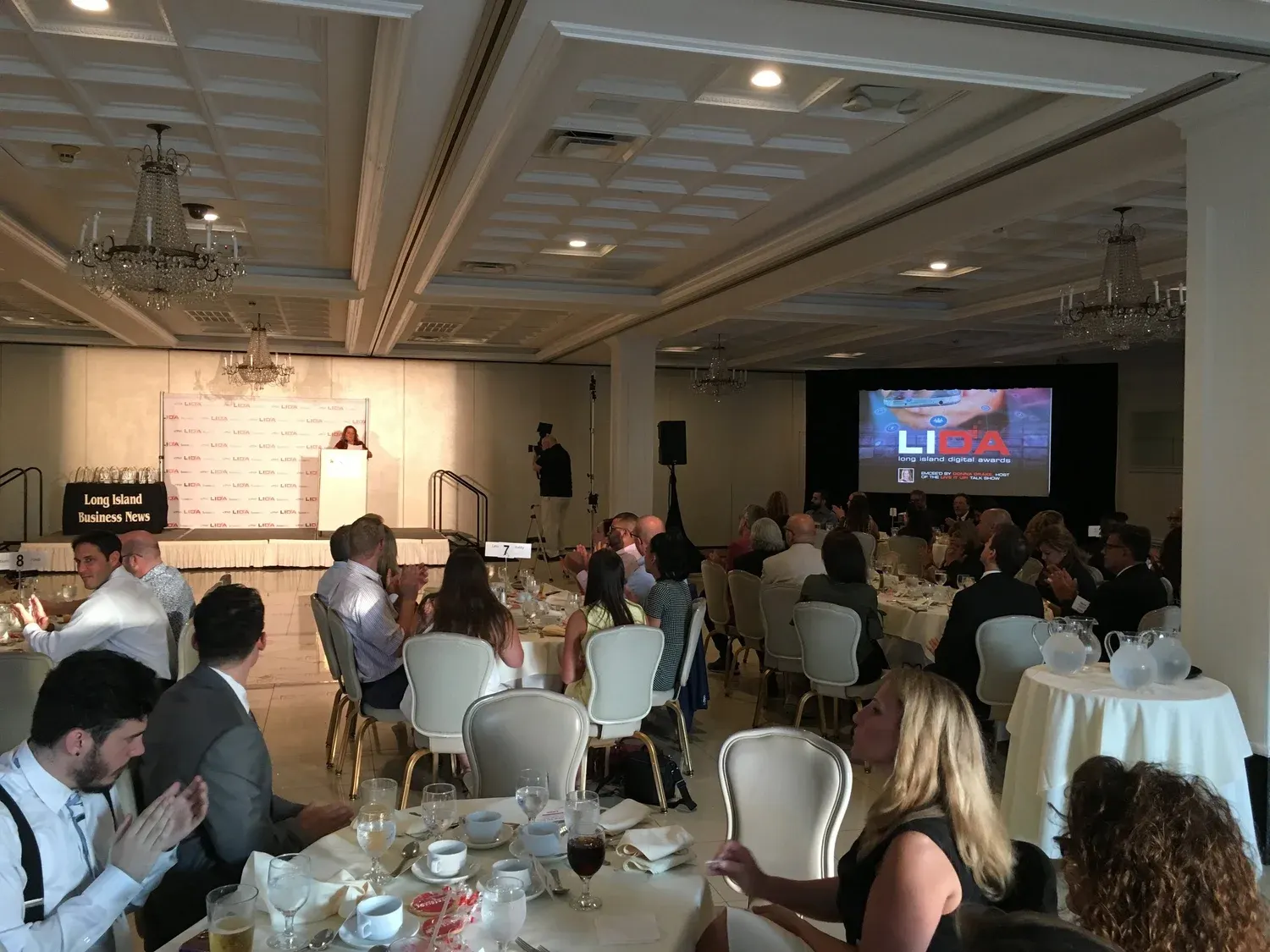
Long Island Video has supported awards programs across the metropolitan region for years, including work with Long Island Business News. The pattern is consistent: the technical package is rarely the hard part. Getting the rhythm right is.
The room is doing three jobs
An awards night asks a ballroom to be three different things in one evening.
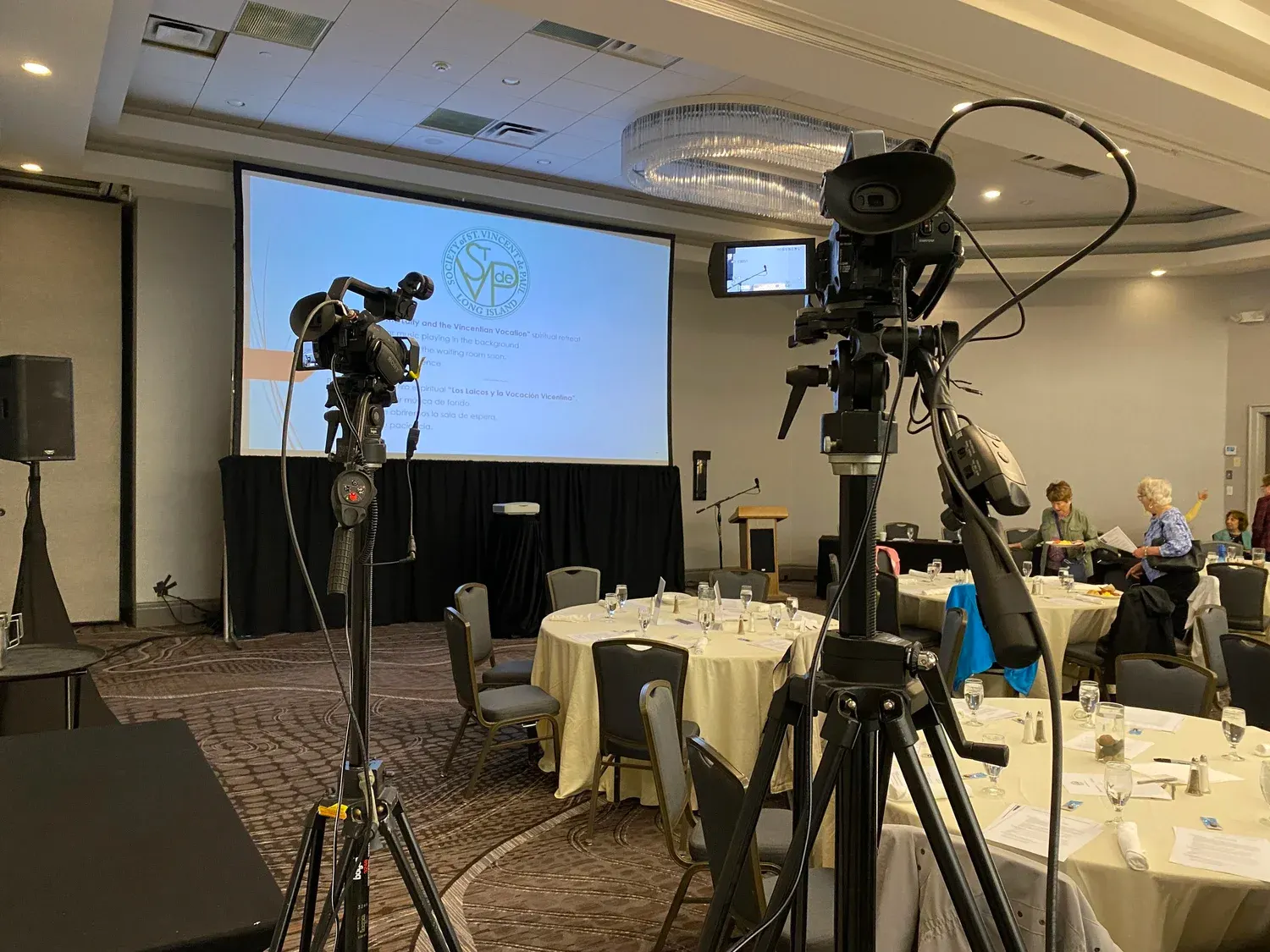
During the reception and dinner it is a social room. People are talking, moving, and looking at each other. It wants warm light, music at a level that supports conversation, and enough on screen to feel branded without demanding attention.
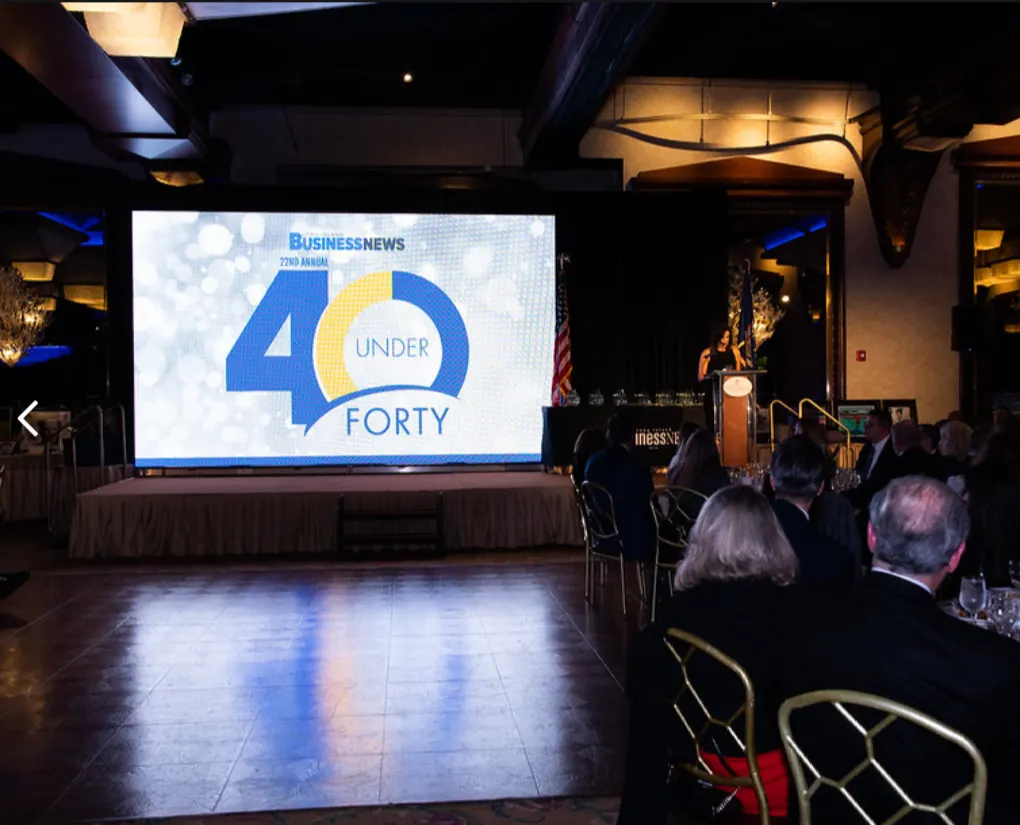
During the program it is a theater. Attention goes to the stage, the light shifts to support that, and the screen becomes the primary visual.
Afterwards it is a social room again, usually louder.
Those three states need to be designed as states, with lighting looks and audio levels that can be moved between cleanly. An event where all three are the same setting feels flat during the program and clinical during dinner.
Screen content is the spine of the program
For most awards shows, the screen is what actually drives the pace.
Build the deck as a sequence, not a folder
Every award needs its own moment on screen: the category, the honorees, and whatever supporting material goes with them. Built as one continuous sequence in show order, that content becomes a spine the whole evening hangs on. Built as a folder of separate files opened as needed, it becomes a source of pauses.
Ask for the content in show order, in one piece, with the honoree names spelled the way they should appear. Name spelling is the single most sensitive detail of the night and the one most likely to arrive late.
Freeze the content, then handle changes deliberately
There is always a change. Somebody cannot attend, a title is wrong, a sponsor is added. That is normal. What matters is that changes go through one person and get made in the master file rather than as a separate slide dropped in at the end.
Set a content deadline that is genuinely a deadline, then treat anything after it as an exception that gets logged and confirmed. A late change made properly costs nothing. A late change made in a hurry is how the wrong name goes on the screen in front of four hundred people.
Decide what is on screen between awards
Dead screen time is what makes an evening feel slow. Decide in advance what is showing while an honoree walks from a table to the stage: the category card, a sponsor rotation, a branded look, anything but a blank surface or the previous slide.
Walk-up music does more than you would think
Music under the walk is the difference between an award being presented and an award being celebrated. It gives the honoree something to move to, covers the applause fading, and signals the audience when to start and stop.
It needs three things: to start on a cue, to be at a level that supports rather than competes with the room, and to end cleanly rather than being faded out arbitrarily. That means somebody is operating it as part of the show, with the cues written down, not pressing play on a laptop from a table.
Also decide who is applauding what. If there are many honorees, applauding each one individually is warm at award three and long at award nineteen. Grouping categories, or applauding at the end of a group, is a legitimate structural choice and it should be made deliberately rather than discovered.
Lighting is what the photographs remember
Two lighting questions matter most.
The first is the stage. An honoree accepting an award should be lit from the front, clearly, at a level that lets a camera and a phone both get a usable picture. This is not a large expense and it is the difference between photographs the organization can use and photographs it cannot.
The second is the room. Uplighting, table washes, and a look on the walls is what makes a hotel ballroom feel like an event rather than a function space. It is also what makes the wide shots work. For a gala where the room design is the point, this is often better money than a larger screen.
If there is a step and repeat or a photo area, light it separately and check it before guests arrive. It is the most photographed square meter of the night and it is usually the last thing anybody looks at.
The moments where an evening slips
In our experience, awards nights lose time in the same few places.
The walk. Honorees sitting at the back of a large room take longer to reach the stage than anyone allowed for. Seating honorees closer to the stage solves it. So does music that covers the walk gracefully.
The unplanned speech. Somebody who was not scheduled to speak takes the microphone. Decide in advance how the host handles it and what the technical signal is.
The photograph. A posed picture after each award is a lovely tradition and it adds up. Decide whether it happens on stage, how long it takes, and whether the program continues underneath it.
The laptop swap. If a presenter has their own material, get it into the master content in advance. Connecting a second machine in the middle of a program is a pause everybody watches.
The video. A tribute or sponsor video is a fixed length. Add those lengths into the run of show honestly rather than estimating them.
Rehearse the top and the handoffs
You will not rehearse an entire awards program, and you do not need to. Rehearse the opening, because the first three minutes set the audience’s expectation of the whole evening. Then rehearse the handoffs: host to presenter, presenter to honoree, honoree back to host, and the transitions into and out of any video.
Walk the honorees through the path to the stage if you can, or have the host explain it clearly from the front. People who know where they are going move faster and look more comfortable.
The takeaway
An awards show is a production, not a dinner with a microphone. The technical decisions are ordinary. The sequencing, the content discipline, and the rehearsal of the joins are what people will remember, without ever being able to say why the evening felt good.
Long Island Video handles projection and videowalls, sound at any scale, lighting, staging and backdrops for awards programs and galas across the tri-state area. If you have a night to plan, start a conversation or call 516 759 5483.