
AV for a House of Worship: Designing for the Room and the Congregation
A sanctuary is one of the hardest rooms an audio-visual system can be asked to work in, and one of the most rewarding to get right. The architecture is usually beautiful, frequently historic, and almost always acoustically hostile to speech. The congregation spans every age and every level of comfort with technology. And the system has to serve worship rather than announce itself.
Those three constraints shape every decision.
Speech intelligibility is the whole job
Ask a congregation what they want from a new system and the answer is nearly always the same: we cannot hear.
Stone, plaster, wood, high vaulted ceilings, and hard pews produce long reverberation. That is glorious for an organ and for congregational singing, and it is the enemy of the spoken word. The reflections continue long enough that one word is still sounding in the room while the next two are being spoken, and the result is sound that is plentiful and unintelligible.
Volume does not fix this. Adding level raises the reflected sound as much as the direct sound, so the ratio that determines whether people understand words does not improve.
What fixes it is getting sound to people directly and keeping it off the hard surfaces. In practice that usually means loudspeakers with controlled directivity, aimed at the congregation and away from the ceiling and the rear wall, and often more sources placed closer to the people rather than fewer sources working harder from the front.
It also means resisting the instinct to solve the problem with a bigger system. In a reverberant sanctuary, a smaller number of correctly placed and correctly aimed loudspeakers regularly outperforms a larger system pointed generally forward.
Assisted listening is part of the design
Any house of worship with an older congregation should treat assisted listening as core, not as an accessory. It is also frequently a legal requirement for assembly spaces. Design it in from the start so it covers the seating properly, and make sure the people who need it know it exists and how to use it, which is a communication task as much as a technical one.
The building has opinions about where things go
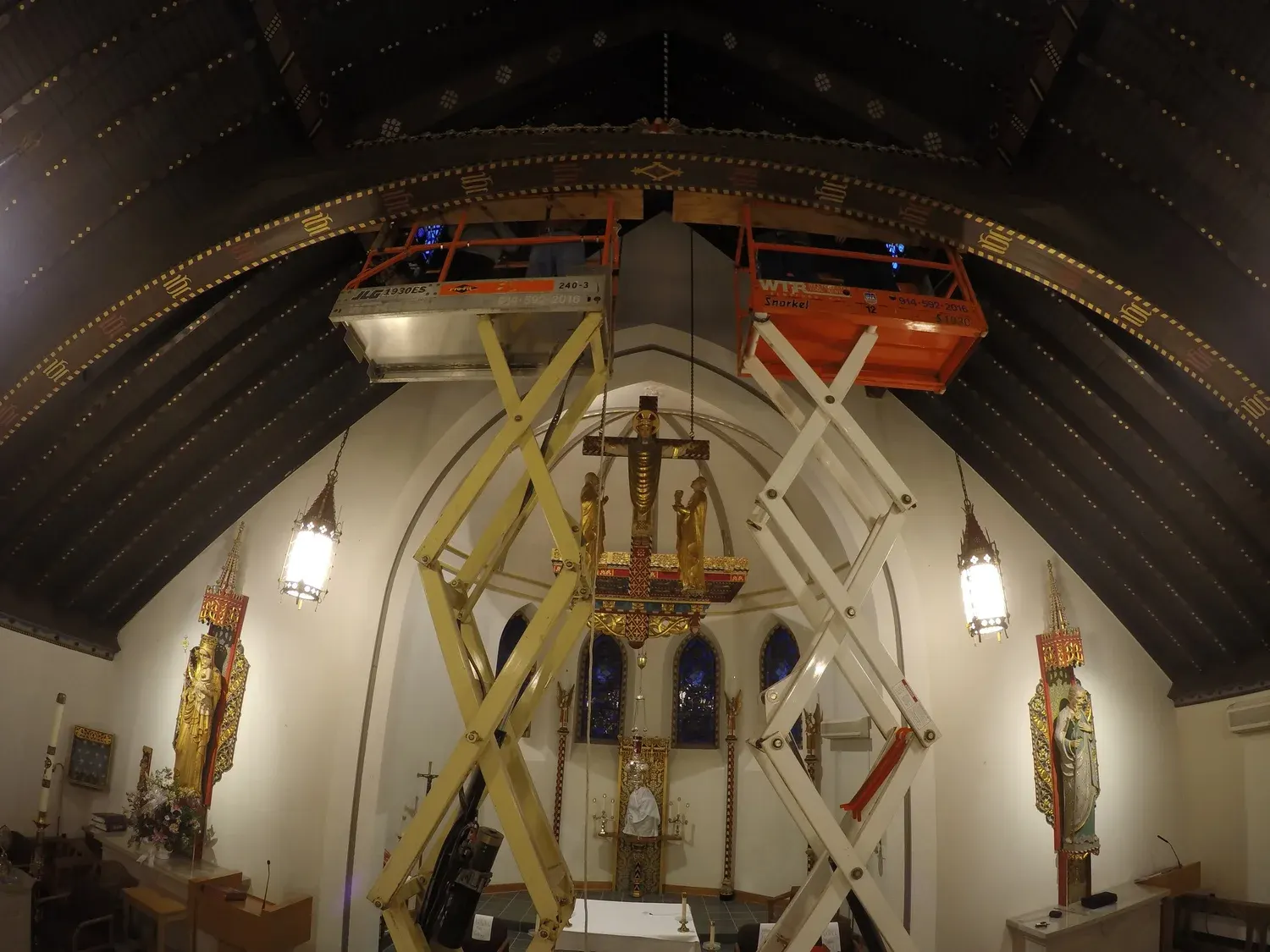
Historic buildings come with real constraints, sometimes formal ones through a landmarks or diocesan review, sometimes simply the congregation’s understandable feeling about what the room should look like.
That means loudspeaker placement, cable paths, and mounting are design problems with an aesthetic dimension. Cable that has to travel around a plaster vault instead of through it. Loudspeakers finished or positioned to disappear against the architecture. Mounts that attach to something structural without damaging something historic.
The practical advice: get the aesthetic conversation started at the same time as the technical one, with whoever actually has to approve it in the room. A design that solves the acoustics perfectly and is rejected on appearance has solved nothing.
Displays deserve the same care. A screen that is beautiful during a contemporary service can be jarring at a wedding or a funeral, so consider whether the display can retract, whether it can be dark and unobtrusive when not in use, or whether smaller displays placed thoughtfully serve better than one large one.
Streaming became permanent
Many congregations began streaming out of necessity and discovered a real ministry in it: the homebound, the ill, family at a distance, and people considering a first visit. It is now part of how a congregation gathers, and it deserves to be designed rather than improvised.
The things that matter most are ordinary.
Audio comes from the sound system, not from a camera. A camera microphone picks up the room, which in a reverberant sanctuary is exactly the sound you have spent the whole project trying to escape. A dedicated feed from the mixer, balanced for headphones, is transformative and inexpensive.
Light the faces. A sanctuary lit for atmosphere often leaves the person speaking in shadow on camera. Some added front light, designed sympathetically, helps the camera and helps the people in the pews.
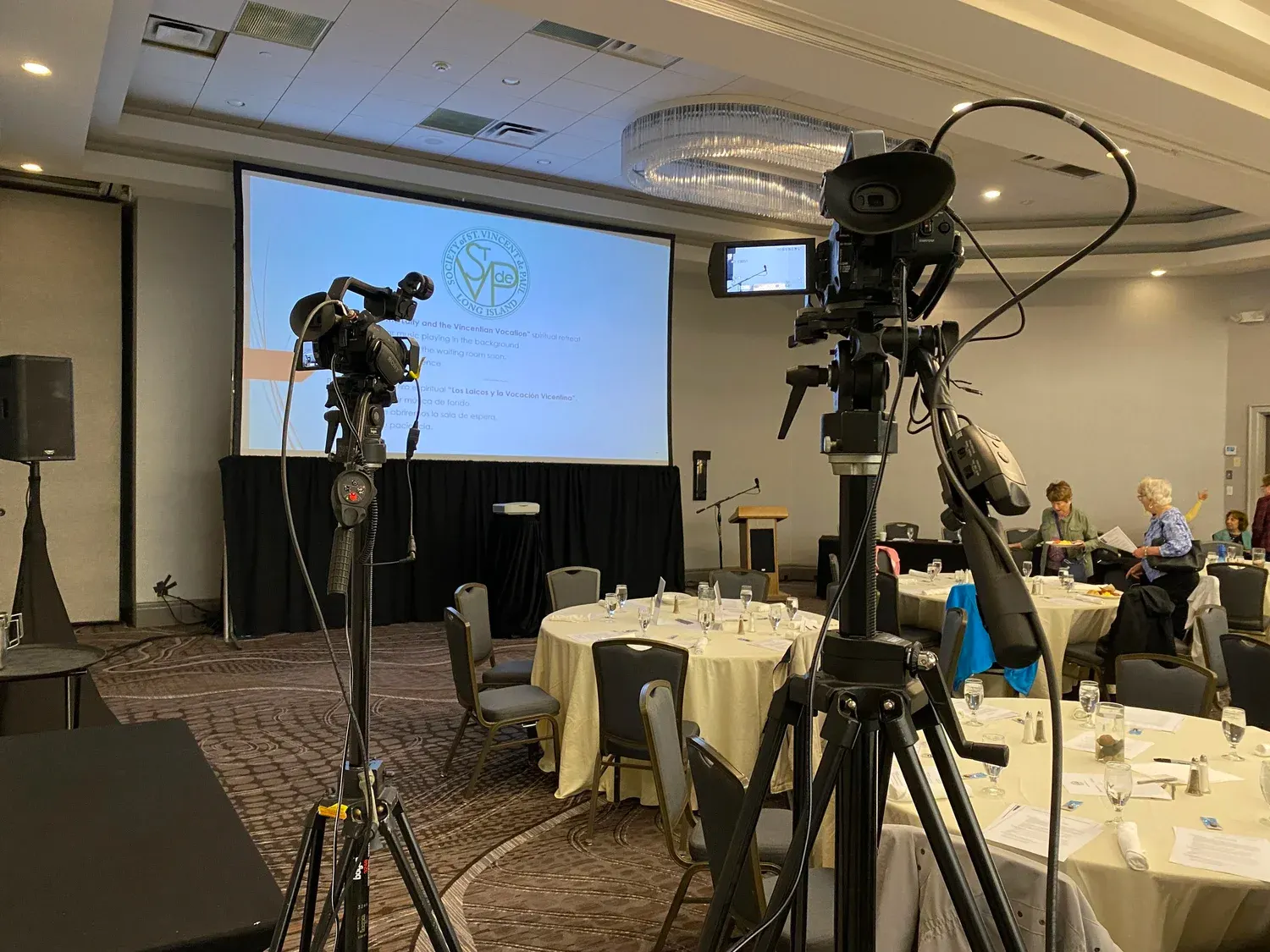
Choose camera positions that do not intrude. A camera in a sight line, or an operator moving during a quiet moment, costs the room something. Fixed positions, sensibly placed, usually serve better than a camera that has to be attended constantly.
Design it for the volunteer who runs it on Sunday
This is the requirement that gets underweighted, and it is the one that determines whether the investment holds up.
Most houses of worship are operated by volunteers with varying availability, varying comfort with technology, and a rotation that changes. A system that requires the one person who understands it will fail the first week that person is away.
So the interface matters as much as the equipment. Presets rather than a blank mixing surface. Clearly labeled controls that say what they do in plain language. A short set of things that can be changed, and a larger set that is locked so it cannot be changed by accident. A written page, kept near the equipment, that says how to start the service, how to start the stream, and what to do if the sound goes away.
Training should be for the whole rotation, repeated, and repeated again a few weeks later when people have real questions. Recording a short walkthrough that a new volunteer can watch is one of the highest-value things a congregation can do for itself.
Phase it honestly
Not every congregation can do everything at once, and there is a sensible order.
Speech intelligibility first, because it is what people complain about and what most affects worship. Assisted listening with it, because it belongs to the same system. Then displays if the style of worship calls for them. Then streaming, which benefits enormously from a sound system that already exists and works.
A design that is planned as a whole and installed in phases costs less overall than three separate projects that each have to work around the last one.
Long Island Video has designed and installed AV systems for houses of worship across the tri-state area, including sound and PA, projection and displays, lighting, and live streaming, with the training and support to keep them running. If your sanctuary is difficult to hear in, tell us about the room or call 516 759 5483.