
Gala and Fundraiser AV: Building the Room Around the Ask
A gala looks like a party and works like a sales meeting. Whether it is a hospital benefit in a Garden City ballroom or a school foundation dinner on the North Shore, every fundraiser on Long Island is judged the same way. The cocktails, the centerpieces and the band all matter, but the evening is judged on one number the next morning, and almost all of that number is decided in a few minutes of program: the mission video, the honoree, and the ask.
That changes how gala audio visual should be planned. At a conference the AV supports a long day of content. At a benefit it has to carry a short, emotional stretch in a room full of people who have been talking, eating and drinking for an hour, and it has to do that without a single awkward pause.
Start with the run of show, not the equipment list
The most useful document for a gala is not the floor plan. It is the run of show, minute by minute, from doors to last call. Every AV decision flows from it.
Who speaks, and in what order? Is there a video, and does it play before or after the honoree? Is there a live auction, a paddle raise, or both? Does the band stop for the program, and who tells them? Is anyone coming up from a table rather than from backstage?
Once that is written down, the equipment almost chooses itself. Without it, the AV company is guessing, and guesses tend to show up as a speaker with no microphone or a video that plays with no sound.
Gala sound: the hardest room on the calendar
Long Island’s catering halls and hotel ballrooms are built for weddings, which means hard walls, mirrors, chandeliers and a dance floor. They are lovely to look at and difficult to speak in. Add three hundred guests who have not seen each other in a year and the room is loud before anyone touches a microphone.
A few things make the difference:
- Coverage, not volume. The guests at the back tables are the ones most likely to drift into conversation during the program, and they are also the most likely to be big donors who arrived late. Speakers placed so the back of the room hears as clearly as the front do more for attention than turning the main system up.
- The right microphone for each person. An honoree who has never spoken in public will hold a handheld at their waist. A lectern microphone or a headset may serve them better. We cover the tradeoffs in more detail in our piece on choosing microphones.
- A separate feed for the band. When the band and the program share one mixer and one operator, every changeover is a scramble. A clean handoff between the two is worth planning.
Gala screens and video: legibility over spectacle
Most gala screens are doing three jobs across the night: a sponsor loop during cocktails and dinner, the mission video, and the auction or paddle raise totals. Each needs something slightly different.
Sponsor slides need to be readable from the farthest table, which usually means fewer logos per slide than the committee wants. The mission video needs a screen big enough and bright enough to compete with the room’s own lighting, and an operator who knows exactly when to dim the house. The paddle raise needs a display that can be updated live, so the room can watch the total climb. That last one is one of the most effective things a screen can do at a benefit, and it only works if someone has rehearsed updating it.
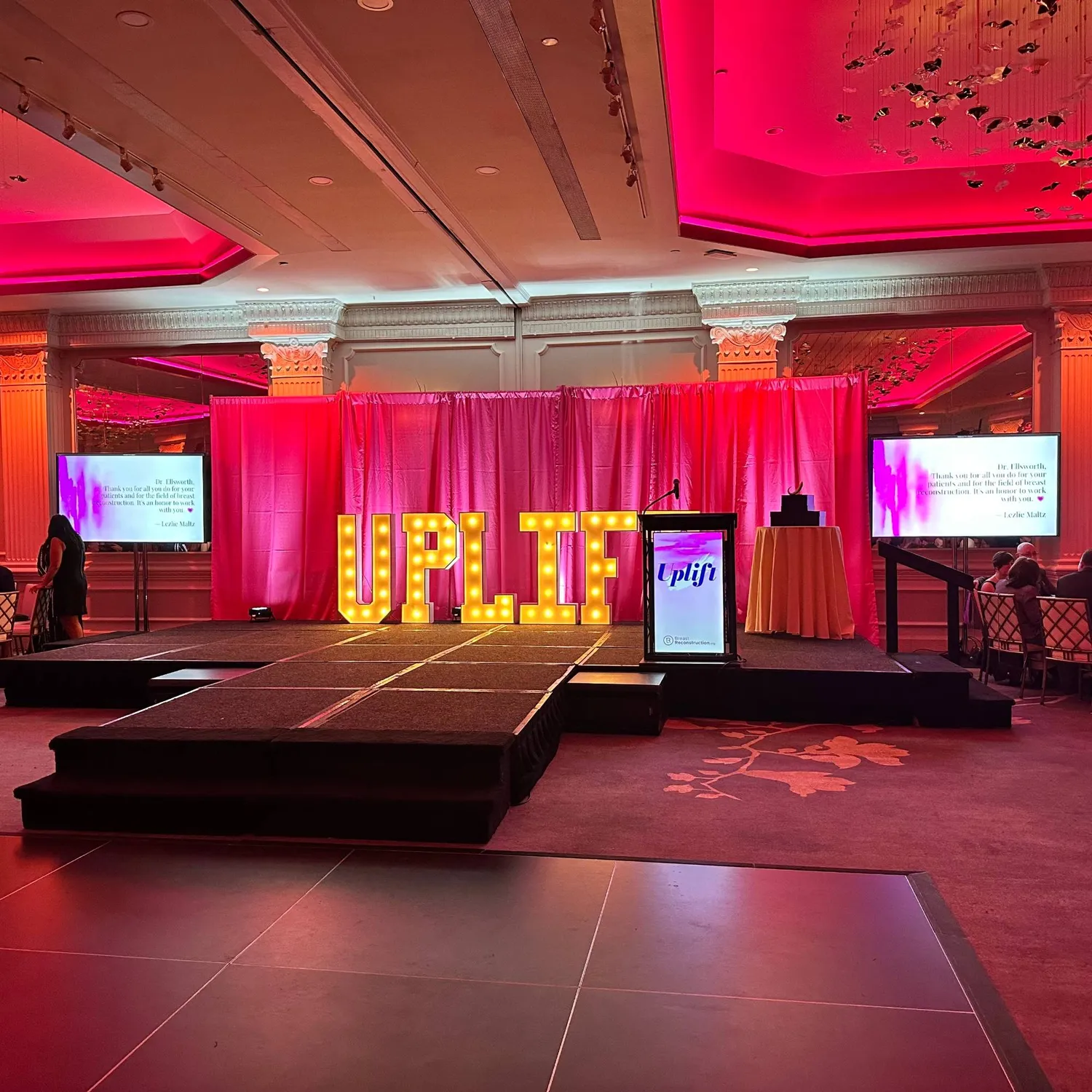
Side screens, like the two flanking the stage in the photograph above, also matter more than people expect. In a long ballroom they are the only way the back half of the room can see a speaker’s face.
Stage lighting and uplighting: the room should change when the program starts
During dinner the light is warm and low so the room feels intimate. When the program begins, something should visibly shift: the stage brightens, the house comes down a step, and every guest understands without being told that it is time to look forward.
That shift is one of the cheapest and most effective attention tools available, and it is easy to skip. Good uplighting and a properly lit stage also make the photographs better, and the photographs are what next year’s invitation is built from.
The fundraising appeal and paddle raise deserve a rehearsal
If the evening has a live appeal, rehearse it with the auctioneer and the AV operator together. Who updates the total on screen, and how fast? Which microphone does the auctioneer use when they walk into the crowd? Does the room light come up so spotters can see the paddles?
These are small questions, but the paddle raise is the single most valuable stretch of the night. A two second delay on the screen or a microphone cutting out as the auctioneer walks between tables costs real money in a way nothing else in the evening does.
Ballroom load in is tighter than you think
Hotels often book a ballroom for a lunch the same day, which leaves a few hours to build a stage, hang or stand screens, run cable, set the band and test everything. Ask the venue early when the room is available, whether there is a freight elevator, and whether the house provides power where the stage will go. Send all of it to your AV team at the same time as the floor plan.
What good fundraiser AV feels like from the tables
Guests should not notice the AV at all. They should hear every word of the honoree’s speech, see the video fill the screen without a flicker, and watch the total climb during the appeal. The program should feel like it was always meant to run exactly that long.
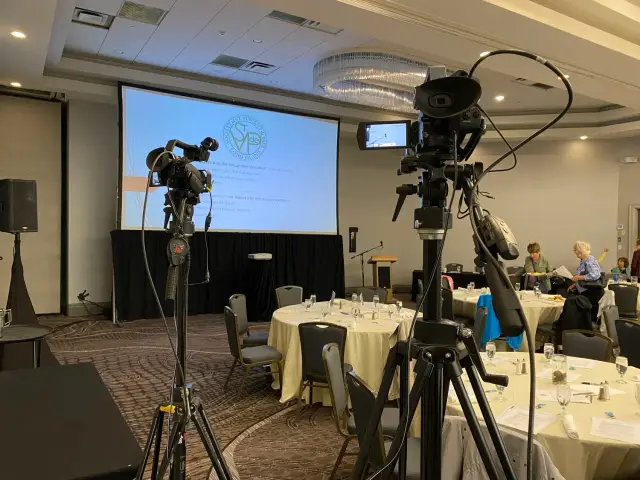
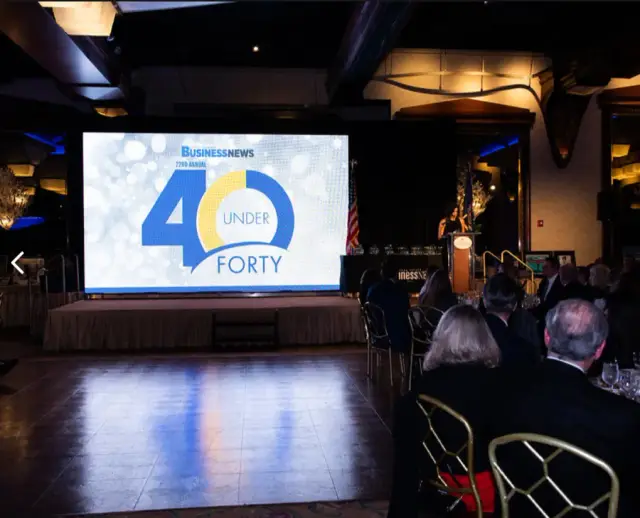
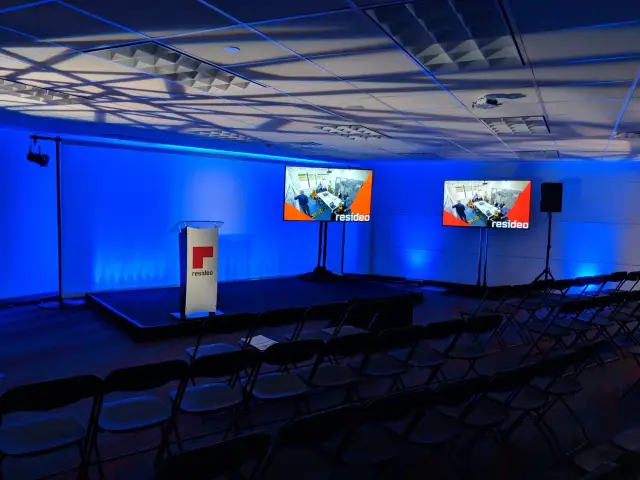
Long Island Video has been providing gala AV, fundraiser staging and award dinner production in ballrooms across Nassau County, Suffolk County and the tri-state area since 1988, including the Garden City Hotel event pictured here. For more on what we bring to an event, see event AV staging and technology. If your benefit is on the calendar, tell us about it or call 516 759 5483.