
How to Brief an AV Company So the Quote Comes Back Right
Most first conversations about an event start the same way. Someone asks for a price on a screen, a projector, and a couple of microphones. It is a reasonable place to start and it is almost never enough to quote from, because the equipment is the last thing that gets decided, not the first.
What actually determines the cost and the shape of an audio-visual package is the room you are in, the number of people who have to hear and see, and what has to happen on stage in what order. Give an AV company those three things and the proposal that comes back will be close to right the first time. Leave them out and you will spend two weeks trading revisions.
Here is what we ask for, and why each item changes the answer.
Start with the room, not the gear
The floor plan is the first document
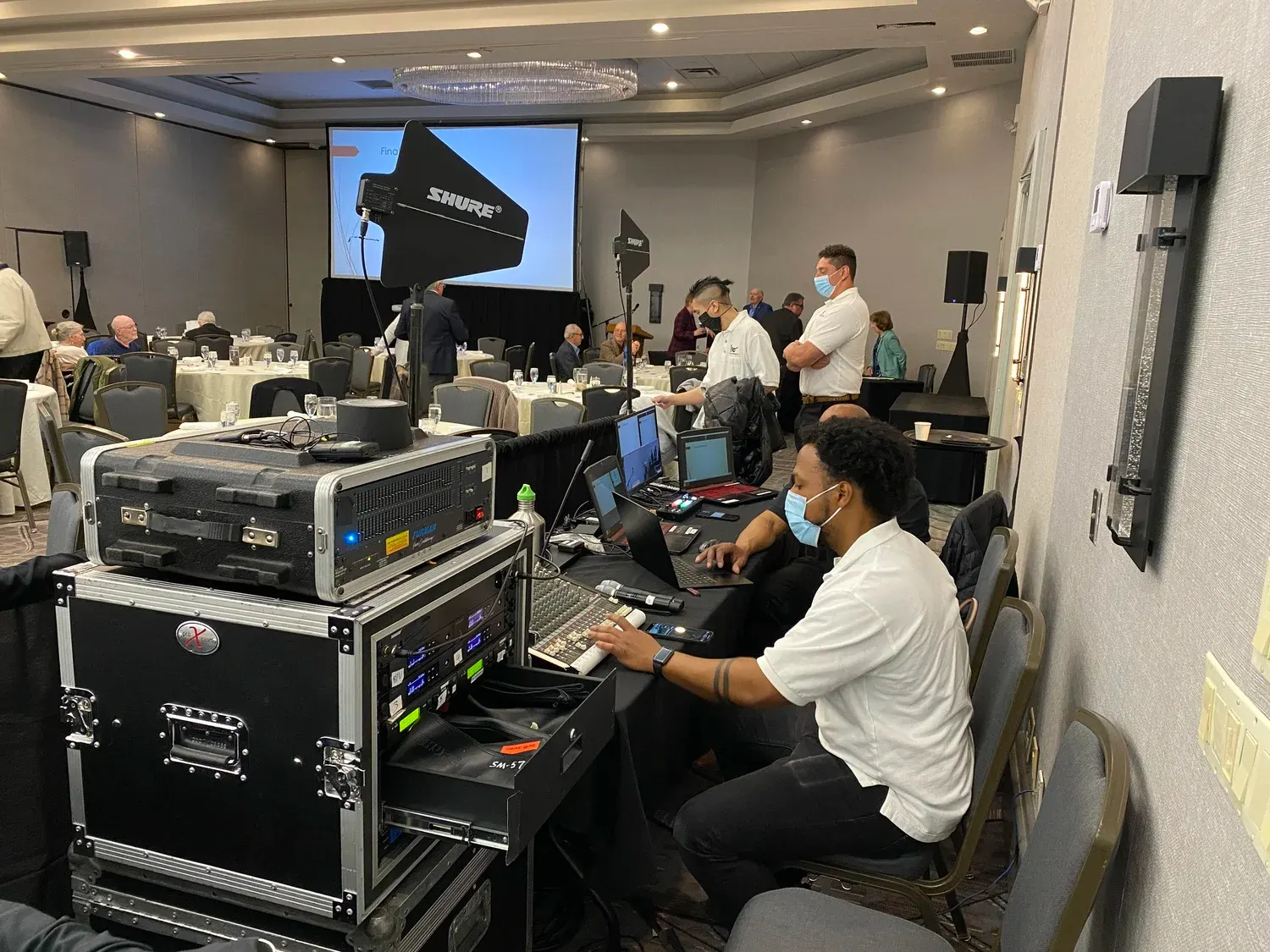
Send the venue’s floor plan before you send anything else. It tells us the throw distance for projection, whether a screen can go where you want it without blocking a fire exit, how far the speakers sit from the last row, and where the control position can live without eating a table of paying guests.
If the venue has a technical packet, that is better still. Most hotels and conference centers keep one, and it usually holds the ceiling height, the load capacity, the power available, and the house restrictions. Ask for it by name. Venues hand it over readily and it saves everybody a site visit.
Ceiling height and rigging points
Ceiling height decides more than people expect. It sets how high a screen can be flown, which sets whether the person at the back can see the bottom of the slide over the heads in front of them. In a room with a low ceiling the answer is often more screens rather than one bigger one, and that is a budget conversation worth having early.
Rigging points decide whether lighting and screens hang or stand. Ground support is a legitimate answer when there is nothing to hang from, but it takes floor space and it changes the look of the room, so it is better to know in week one than in the final week.
What the room does to sound
A ballroom with drapes and carpet behaves nothing like an atrium with a glass wall and a hard floor. Tell us which one you have. Reverberant rooms need a different loudspeaker approach, and a room with an unavoidable acoustic problem is a design problem, not something to solve by turning the system up on the day.
Then the run of show
Who speaks, and from where
Count the people who will hold a microphone and tell us where each of them will be standing. A single presenter at a lectern is one system. A lectern plus a panel of four plus a roving question microphone in the audience is a different system with different mixing demands and a different failure mode.
Panels in particular are worth flagging early. Four open microphones in a live room is the classic setup for feedback, and the way to prevent it is choosing the right microphones and the right coverage in the design, not riding faders during the session.
What is on screen, and where it comes from
Tell us how many laptops will connect, who owns them, and whether presenters are bringing their own. Ask whether anyone is presenting from a tablet or a phone. Say whether there is video with sound, because audio from a playback source has to be routed into the sound system and it is the single most common thing discovered five minutes before doors.
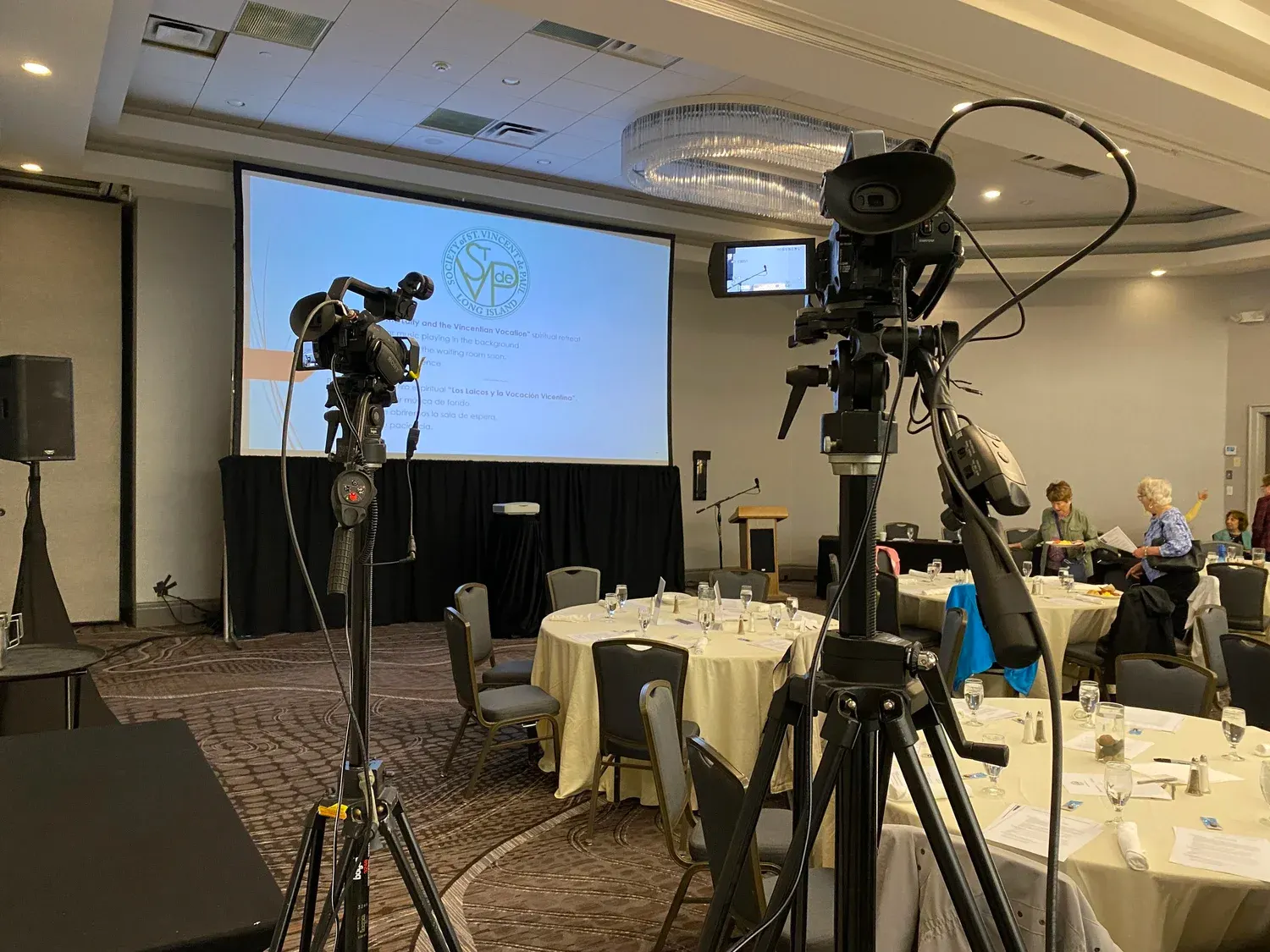
If you are recording or streaming, say so in the brief rather than adding it later. A room designed for a live audience and a room designed for a camera are not the same room. Cameras need light on faces, a clean audio feed rather than a room microphone, and sight lines that do not put a camera operator in the middle of the guest tables.
Load in, load out, and the hours nobody counts
Ask the venue three questions and pass the answers along: when can we get in, what time do we have to be out, and is there another event in the room before or after ours.
These set the labor, and labor is a real share of the number on the proposal. A room that is available the day before is a calm setup. The same room available at six in the morning for a nine o’clock start is the same equipment with a bigger crew. Neither is wrong, but they price differently, and it is far better to discover that while there is still time to negotiate the venue schedule.
Also worth passing on: the loading dock situation, whether there is an elevator between the dock and the room, and whether the union or the house crew has any requirements. Venues vary enormously on this and it is not something anyone can guess.
The budget conversation is not a trap
Planners are often reluctant to name a number, on the theory that the quote will expand to fill it. In practice the opposite happens. Without a range, an AV company has to guess at scale, and the guess is either too rich for you or too thin for the event you actually described.
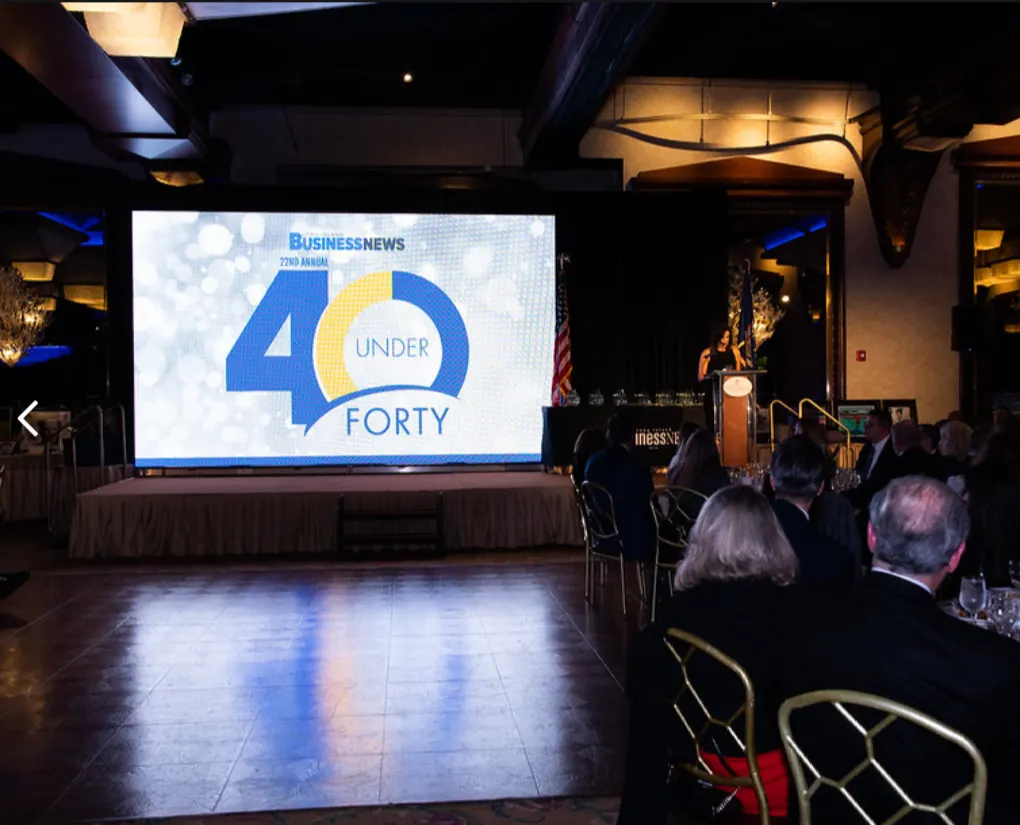
Naming a range lets a good production team tell you where the money is best spent for your specific event. Sometimes that is a bigger screen. Often it is not. For an awards dinner it might be lighting, because a beautifully lit room photographs well and a slightly smaller screen costs the audience nothing. For a technical conference it is usually the display and the sound, because content legibility is the whole point.
What to send in the first email
If you send only these, a useful proposal can usually be written from them:
- The venue name, the room name, and the floor plan or technical packet
- The date, the doors time, and the load in and load out windows
- The headcount and the seating style, whether that is rounds, theater, or classroom
- A draft run of show, even a rough one, with speakers and segments
- Whether the event is being recorded, streamed, or both
- Your budget range, and what matters most to you inside it
Anything missing we will ask about. But a brief with those six items lets us get to a real conversation about the event instead of a guessing game about the equipment.
Planning something in the New York metropolitan region and want a second opinion on the AV before you commit to a venue? Get in touch or call 516 759 5483. We have worked in most of the rooms in this market and we are happy to tell you what a space will and will not do.